
The Evolution of Storage: A 300x Speed Leap in Seven Years
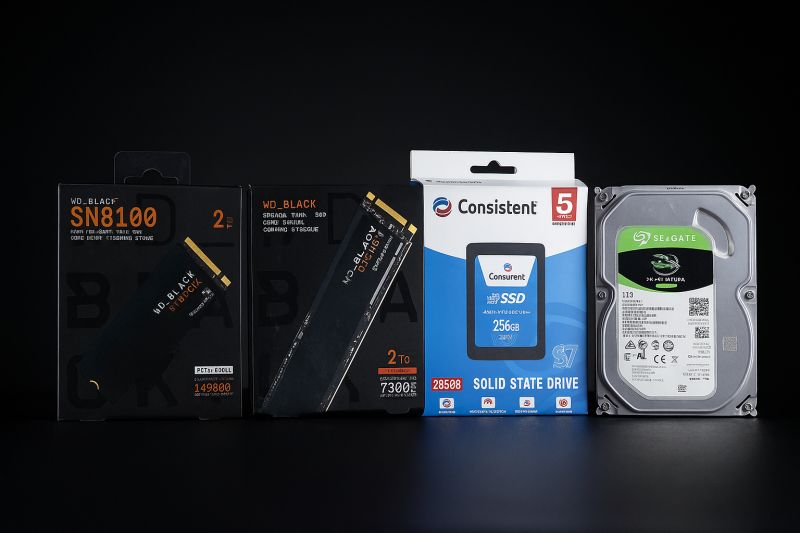
The Velocity of Storage Technology
The trajectory of storage technology over the last seven years represents one of the most significant performance leaps in modern computing. Between 2018 and 2025, we have transitioned from mechanical limitations to silicon-based speeds that were previously reserved for enterprise-grade data centers. This evolution has fundamentally changed the baseline for system responsiveness and data throughput.
A Seven-Year Performance Timeline
The shift from legacy hardware to next-generation interfaces highlights a 300x increase in total throughput:
* 2018: The HDD Era (200 MB/s) – Mechanical drives were the standard bottleneck, where high-capacity storage required significant patience for boot times and sequential file transfers.
* 2020: SATA SSD (550 MB/s) – The mainstream adoption of solid-state drives via the SATA interface provided the first major leap, effectively eliminating the mechanical latency that plagued earlier systems.
* 2024: NVMe Gen 4 (7,000 MB/s) – The transition to the PCIe 4.0 interface offered a 12x performance boost over SATA, creating a seamless environment for professional software development and high-fidelity gaming.
* 2025: NVMe Gen 5 (14,000 MB/s) – The current frontier doubles the performance of its predecessor, providing the necessary bandwidth for lightning-fast data ingestion.
Impact on Modern Workloads
This rapid acceleration is not merely a benchmark victory; it is a necessity for the current era of computing. The shift to 14,000 MB/s is a critical enabler for AI and Large Language Model (LLM) workloads, which demand massive I/O capabilities to process vast datasets efficiently.
What used to take several minutes of idle time now occurs almost instantaneously. As storage bottlenecks continue to vanish, the focus shifts toward optimizing software and architecture to keep pace with this lightning-fast hardware evolution.